Summer Solstice Jubilation–Multiple Exposure Proof

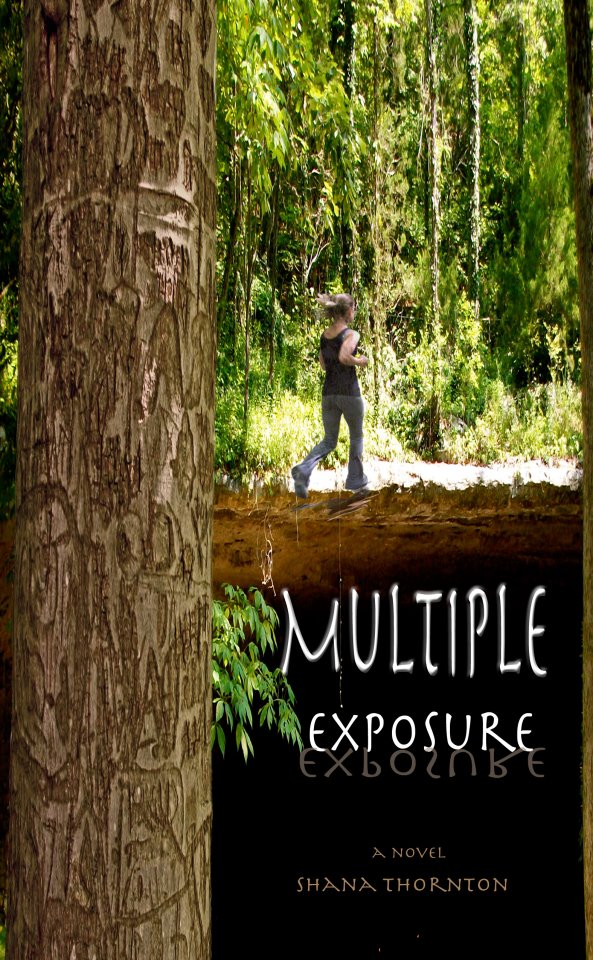
Cover & Illustration Design by Steven Walker, http://www.stevenMwalkerImages.com

The proof of my novel, Multiple Exposure, arrived in the mail on the Summer Solstice. I hesitated for a single second before opening the box. Waiting for that moment had nothing to do with waiting…I thought quickly, working toward the moment was a better description.

Not only have I been imagining, writing, collecting research, editing, learning about the publishing process, revising, formatting, and designing, but I’ve asked for the help of my friends (they’ve even taught me how to take some deep breaths). And, I have gotten by with their help everyday. They are professionals who’ve advised, edited, promoted, and more–the most important gifts I’ve been given in the process of creating a book.

Working with Steven on the cover was eye-opening collaboration. He asked, “what are the three most important images in your book that you’d like to emphasize on the cover?”
I thought about the question for 24 hours. My answer to this question revealed strengths in the book that I hadn’t recognized though they’d played an integral, even critical, role in the novel. The next day I drove an hour to take a series of photos for one of the images on the cover. Many times, a single question crafted changes in the process.

Now that the proofing process is reaching an end, I look forward to the next delivery…the box that contains the finished and published books. They’ll be on sale 2 September, 2012, and I’ll keep blogging to keep you informed. I’m planning a book launch party, so more times to celebrate are on the horizon.

Here’s a description of Multiple Exposure:
Ellen Masters’ family has a history—distillers of brandy and owners of the second entrance to Cumberland Cave. In the novel, Multiple Exposure, Ellen tells the story of growing up with one foot rooted in the town’s woodlands, and another as a child of consequences, after events surrounding her father, a Captain in the Army, propel the family to places none of them could have foreseen.

Ellen returns to the place of her childhood—a University town and Army post share the same parks and rivers. This is a Southern town populated by a watery, haunted landscape and family histories that become legends. She inherits the Masters’ property connected to the cave, and she begins her own family there, as a professor at the university, with an Army officer husband who is deployed to Iraq and then to Afghanistan. After three students are murdered near her home, Ellen’s fears intensify as she begins to unravel the mysteries of not only that place, but also her mind.

In this page-turning novel, Ellen runs from her past, runs toward the unknowable, blindly guessing, and Multiple Exposure represents the individual’s current struggles within today’s virtual social culture. She’s fumbling through online meetings and Skype calls to her husband from a war zone, and all the while, Ellen searches for an explanation to her world and yearns for a connection with her husband and family.

Writing Words in Paint & Finding the Muse

Image from Customs House Museum The Words of Women exhibition

Last week, I carried a plate of paints up a 10-foot ladder (that felt higher) and chose words from a short piece of fiction that I created for an art exhibition, The Words of Women. The exhibition features writings by women who were mailed a “muse” and challenged to write from the inspiration discovered in the object. I had opened a small box in the mail and found an antique. I didn’t know what it would be, only that it was for a collaborative exhibition to celebrate Women’s History Month. The art curator Terri Jordan at the Custom’s House Museum mailed out ten muses to ten writers from Tennessee. And, I received a silver, engraved, double-headed eagle ring that slipped perfectly onto my ring finger.

I didn’t know what the others writers had received, nor did I know what style they would write. The possibilities were endless as long as it fit within the 1200 word-limit parameters. I didn’t find out what all of the other writers had received until the week before the exhibition when we began to paint on the walls—a pair of silk stockings, a small brown purse, a porcelain thimble, a snake brooch with emerald eyes, and an unmarked black and white photograph of a woman in her twenties living in the ‘20s, to name a few of the objects. There were more. We only knew what we could see, and we created from that.

But what? How could I write from an unknown object? That was the first dilemma, which was soon resolved when a character began to take shape around the ring.  But the toughest questions were to follow—how could I paint the walls? With text? With visuals? We had one week to paint whatever we wanted on our section. Enormously high, white walls. It was uncomfortable at times—the process, but I was caught up in a new creative space, and that became more and more evident.

What I discovered is that it’s crucial to take chances, to risk paint on the walls, and climbing to new heights in order to look from a different perspective. On the night of the opening, terrible storms raged all around us and prevented some friends from attending, but the comments we received were surprising and encouraging. “This is a brave show.” “It’s good to try something different. To start something new.” And, it wasn’t uniform. Writers merging with visual arts? It confuses the mind. There was the question, “why not have visual artists interpret the work of the writers, instead of having the writers paint on the walls?” And, I finally understood why some artists don’t particularly want to write their biographies, don’t want to write artist’s statements, or discuss their process using narrative.

Yet what was remarkable for me was that my process was affected. I edited. I rewrote. I wrote more that didn’t make it into the final print, but that didn’t matter. And, I wrote differently. I think the other writers were challenged as well.

The writings varied—poems, narratives, personal reflections about the receipt of the muse. The words on the wall also reflected our different approaches and styles. Mitzi Cross swirled a giant, diamond-backed rattlesnake onto the wall. Amy Wright stopped in like the Buddha, grabbing up the paint and brushing HOPE onto the wall, then shaping the remainder of her poetic line around it; she finished in a couple of hours one afternoon. Cindy Marsh used the letters from the Goldsmith Press and stamped a few hours here and there for days. Rebecca Beach said that she had two things she could draw, and a tree grew on the morning of the opening as the end result. Melanie Meadow’s Threads of Grace narrative twined through recognizable places in the town. Story after poem, after inspiration, moving around the gallery walls to read them all, to stand in front of the muses.

When I read Traci Brimhall’s piece about Kalamazoo’s Artifactory, I noticed the similarities and was reminded of the importance of exhibitions that celebrate community history, as well as visual and literary history. Layering gives more to the viewer, the reader, and the community.

The Words of Women exhibition is open at the Customs House Museum in Clarksville, TN, through the end of April. There’s a full schedule of events for the next two months, so check the Museum website for details.

This Thursday, March 8, I’ll be reading with friends and writers from the community at the Museum for a Writer’s Night, beginning at 6:30.

NaNoWriMo—Planning, Using Humor & Finishing Early

I’m currently 7 days in to NaNoWriMo and cranking out an average of 1,800+ words a day from four narrators about Poke Sallet Queen, my current novel-in-progress. This year, I have a plan, unlike last year, when I participated in my first National Novel Writing Month and felt like a NaNo virgin. I didn’t know what I’d write, nor did I have names for my lead characters. I didn’t know those characters at all, so complete strangers introduced themselves and walked onto my pages. I tend to see the page like a cartoonist or a graphic novelist, even if it only looks like black typeface on a white page. In spite of the unfamiliar territory, I ran into my first NaNo and never knew what was going to happen around the next corner. Free-writing, it unfolded as I went, but I spent a lot of time with my head in my hands…waiting…waiting for the next scene to appear, and then I’d be off and running again until suddenly confronting another dead end. Due to that, the novel is still in-progress, and the editing has been a nightmare. In my haste to make the word count, I skipped quotation marks and indentations. At least, I did meet the goal and managed to hit enter for paragraph divisions.

This year, I planned to do NaNo all along without the same mistakes, and I started outlining the book back in the summer. I created the characters with simple notes about their personalities, and the title danced right out there into my writing journal. Everything was hand-written for Poke Sallet Queen, except for the actual novel. I didn’t write a line of dialogue or a descriptive paragraph. I plotted and planned. I harvested the research from my relatives—moonshine, alcohol stills, poke sallet festivals, cakewalks, long-rifles, magic recipes, midwifery and mysterious births and disappearances. Just planning the novel made my fingers itch to start typing, but I staved it off and upped the anticipation. I wanted the momentum of waiting for November 1st.

I wrote my first novel, Multiple Exposure, outside of NaNoWriMo in the traditional way—alone…for four years. I sheltered the book in a protective mode. It’s a dark psychological novel about war and isolation, and I didn’t share my project with anyone until it was completely drafted and I only chose people with military experience and/or an awareness of post-traumatic stress disorder. There’s no humor in Multiple Exposure, only haunting settings, suspense and mental dilemmas. The NaNo novel from last year is also quite serious, but focused on a girl’s coming of age and confrontation with spiritual practices and beliefs.

For Poke Sallet Queen, the key differences have been outlining, sharing conversations with other people about my book, and using humor. I wanted it all for this book—I talked and talked to my relatives, to Terry (my husband), and anyone who knew about farming, Southern traditions, old time festivals becoming modern, drugs, midwifery, drinking and family mysteries. The humor naturally arose from all those voices, as did surprising stories about compassion, revenge, and the losses and gains involved in modernization.

I also planned a male narrator, which is different from the other two books. I wanted an old guy to speak, so I chose my great-grandfather’s “voice” and his nickname (Hoot) combined with my great-uncle’s voice, which I actually heard growing up. My great-grandfather was dead before I was born, but there’s been no shortage of stories to hear about him. And so, I’ve been conjuring up Hoot, the male voice among three women narrators, and that’s been the most challenging aspect of this NaNo novel.

Planning has made everything easier, even the difficulty of writing a male voice that existed before I was born. I hope to finish earlier than expected this year, without pushing it to the deadline like last year. Having fun while writing NaNo is the key to meeting the goal, and this year, with humor, conversations and a plan, writing 50,000 words has been (so far) much more enjoyable.

Are you writing a novel? Do you prefer to draft over a long period of time? Or, does the speed of NaNoWriMo appeal to you for completing a first draft? And, do you talk to other people about your work before it’s completely drafted?

*This article was first published on The Writer’s Life blog on Her Circle Ezine.