Cave Currents

I’ve been imagining this triple digit heat without air conditioning. Where would I go for comfort? Our ancestors didn’t have the convenience of HVAC units, so they sought the dark, moist enclosures of caves. They parked their chairs at the mouths of caves and plucked guitar strings, gossiped, brought out their checkers and playing cards. Over the past few years, I’ve toured several caves, learning about their differences and enjoying the experience of caving with friends and family members. I like watching the different ways that people respond to being in a cave. Some people feel claustrophobic, others want to sneak away from the group and explore on their own, many joke to ease their fears, and one or two imagine all the previous lives to pass through the earth’s corridors.

A grandmother said, “It’s cold enough to dance the jitterbug without breaking a sweat in the summertime.”
We were lined up, waiting to descend into the cavern, with flashlights in hand. I asked her if she’d been on a date at the cave. She giggled, said, “Now, how’d you know that?”
I shrugged, “Good guess.”
She continued, “It was so cold in there that he gave me his jacket. It was scary too. Caves make kind of creepy shapes.”
“And you want to go back inside?” I asked.
“Yeah, you always discover something new, see it in a different way.”

In one of the caves I toured, couples can have their wedding ceremony. The wet, limestone trail unevenly dips further into the earth’s interior. I consider a 21st-century bride in popular stilettos wobbling around the winding passage toward the groom. She could wear a headlamp instead of a veil. That might be a great scene for a novel.

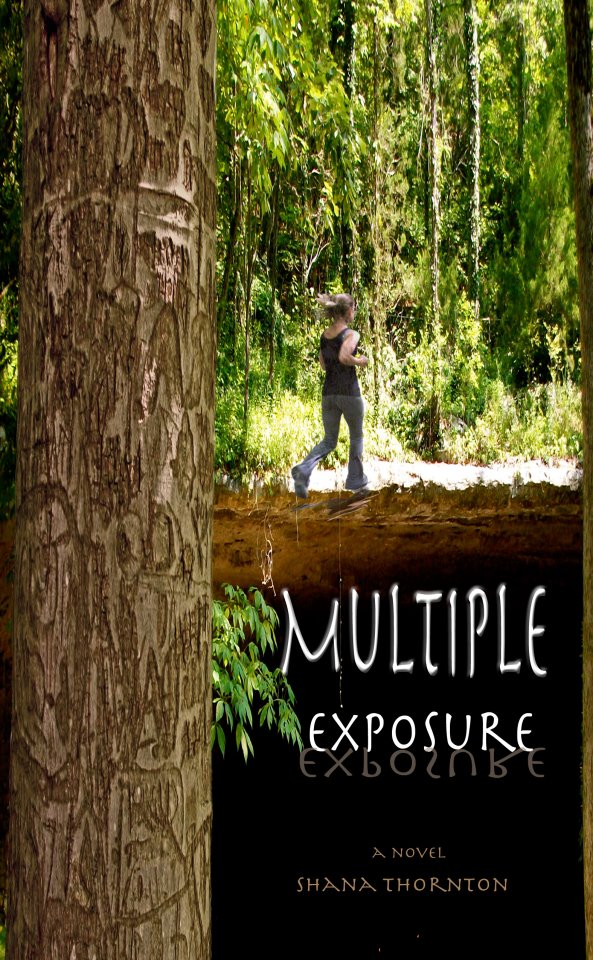
In my novel Multiple Exposure, a cave is one of the strongest parts of the setting, but no one gets married in it for this book. I wrote about other faces of the cave–how inviting it can be, offering cool air during the heat; how frightening it can become in the darkness; how secretly it holds mysteries; how inspiring the process of discovery becomes when people explore the underground regions of the earth.

With 109 degrees pushing Middle Tennessee thermometers to extremes, caves offer a comforting embrace. Afterall, they are carving out spaces with a constancy that we forget while we scurry around up here, under the sun.
Capturing Whispers

Today, I made good on a 6-month-old promise to visit my great-Uncle B and listen to his stories about making, selling and “running” corn whiskey. These stories are part of my novel-in-progress, Poke Sallet Queen. I walked down the hallway of the nursing home with a heavy heart. In January, when I first made the promise to visit, he was living at home. Until two weeks ago, he would have offered a seat on his couch to me. But today, I stood beside a hospital bed and listened as he struggled to talk, as he pushed his whispers up toward my ear, as he stopped to give his vocal chords a rest while I leaned over to listen.

They found a tumor, cancer, in the back of his throat. He’s over 80 and hasn’t missed a second of life, nor has he lost very many strands from his head of full, gray hair. Sharp, direct, funny– that’s still Uncle B, even in the nursing home. I learned new ways to hide a keg today. He said that he served 30 days in Montgomery, AL, then laughed, “I’ve always been proud of that.” He smiled. His deep, full strength voice broke in sometimes, like a radio signal momentarily playing clearly through the static. I asked questions to clarify previous stories I’ve heard. My great Aunt said to him, “You know Shana’s gonna write a book?”
He nodded. He knew and said, “Well, I hope she already is.”
“I have already written a lot,” I said.
He asked about my brother and then, we made plans to talk again in two weeks. His throat became tired.
He said, “When you come back, we can meet at my house and I’ll tell you more stories.”

Leaving, walking down the hallway, my voice caught while talking to my great Aunt, “I messed up,” I said. “I should’ve visited earlier.”

I repeated this statement to my Mom, then to my husband, who said, “Just go forward. Write and go forward.”

I used to tell my students to take every opportunity to record the stories told by their grandparents, and I failed to follow my own advice in the most thoughtful way. Thinking about my elderly relatives on the drive home, I vowed to start visiting them regularly in order to capture their voices above a whisper.

Summer Solstice Jubilation–Multiple Exposure Proof

Cover & Illustration Design by Steven Walker, http://www.stevenMwalkerImages.com

The proof of my novel, Multiple Exposure, arrived in the mail on the Summer Solstice. I hesitated for a single second before opening the box. Waiting for that moment had nothing to do with waiting…I thought quickly, working toward the moment was a better description.

Not only have I been imagining, writing, collecting research, editing, learning about the publishing process, revising, formatting, and designing, but I’ve asked for the help of my friends (they’ve even taught me how to take some deep breaths). And, I have gotten by with their help everyday. They are professionals who’ve advised, edited, promoted, and more–the most important gifts I’ve been given in the process of creating a book.

Working with Steven on the cover was eye-opening collaboration. He asked, “what are the three most important images in your book that you’d like to emphasize on the cover?”
I thought about the question for 24 hours. My answer to this question revealed strengths in the book that I hadn’t recognized though they’d played an integral, even critical, role in the novel. The next day I drove an hour to take a series of photos for one of the images on the cover. Many times, a single question crafted changes in the process.

Now that the proofing process is reaching an end, I look forward to the next delivery…the box that contains the finished and published books. They’ll be on sale 2 September, 2012, and I’ll keep blogging to keep you informed. I’m planning a book launch party, so more times to celebrate are on the horizon.

Here’s a description of Multiple Exposure:
Ellen Masters’ family has a history—distillers of brandy and owners of the second entrance to Cumberland Cave. In the novel, Multiple Exposure, Ellen tells the story of growing up with one foot rooted in the town’s woodlands, and another as a child of consequences, after events surrounding her father, a Captain in the Army, propel the family to places none of them could have foreseen.

Ellen returns to the place of her childhood—a University town and Army post share the same parks and rivers. This is a Southern town populated by a watery, haunted landscape and family histories that become legends. She inherits the Masters’ property connected to the cave, and she begins her own family there, as a professor at the university, with an Army officer husband who is deployed to Iraq and then to Afghanistan. After three students are murdered near her home, Ellen’s fears intensify as she begins to unravel the mysteries of not only that place, but also her mind.

In this page-turning novel, Ellen runs from her past, runs toward the unknowable, blindly guessing, and Multiple Exposure represents the individual’s current struggles within today’s virtual social culture. She’s fumbling through online meetings and Skype calls to her husband from a war zone, and all the while, Ellen searches for an explanation to her world and yearns for a connection with her husband and family.

Writing Words in Paint & Finding the Muse

Image from Customs House Museum The Words of Women exhibition

Last week, I carried a plate of paints up a 10-foot ladder (that felt higher) and chose words from a short piece of fiction that I created for an art exhibition, The Words of Women. The exhibition features writings by women who were mailed a “muse” and challenged to write from the inspiration discovered in the object. I had opened a small box in the mail and found an antique. I didn’t know what it would be, only that it was for a collaborative exhibition to celebrate Women’s History Month. The art curator Terri Jordan at the Custom’s House Museum mailed out ten muses to ten writers from Tennessee. And, I received a silver, engraved, double-headed eagle ring that slipped perfectly onto my ring finger.

I didn’t know what the others writers had received, nor did I know what style they would write. The possibilities were endless as long as it fit within the 1200 word-limit parameters. I didn’t find out what all of the other writers had received until the week before the exhibition when we began to paint on the walls—a pair of silk stockings, a small brown purse, a porcelain thimble, a snake brooch with emerald eyes, and an unmarked black and white photograph of a woman in her twenties living in the ‘20s, to name a few of the objects. There were more. We only knew what we could see, and we created from that.

But what? How could I write from an unknown object? That was the first dilemma, which was soon resolved when a character began to take shape around the ring.  But the toughest questions were to follow—how could I paint the walls? With text? With visuals? We had one week to paint whatever we wanted on our section. Enormously high, white walls. It was uncomfortable at times—the process, but I was caught up in a new creative space, and that became more and more evident.

What I discovered is that it’s crucial to take chances, to risk paint on the walls, and climbing to new heights in order to look from a different perspective. On the night of the opening, terrible storms raged all around us and prevented some friends from attending, but the comments we received were surprising and encouraging. “This is a brave show.” “It’s good to try something different. To start something new.” And, it wasn’t uniform. Writers merging with visual arts? It confuses the mind. There was the question, “why not have visual artists interpret the work of the writers, instead of having the writers paint on the walls?” And, I finally understood why some artists don’t particularly want to write their biographies, don’t want to write artist’s statements, or discuss their process using narrative.

Yet what was remarkable for me was that my process was affected. I edited. I rewrote. I wrote more that didn’t make it into the final print, but that didn’t matter. And, I wrote differently. I think the other writers were challenged as well.

The writings varied—poems, narratives, personal reflections about the receipt of the muse. The words on the wall also reflected our different approaches and styles. Mitzi Cross swirled a giant, diamond-backed rattlesnake onto the wall. Amy Wright stopped in like the Buddha, grabbing up the paint and brushing HOPE onto the wall, then shaping the remainder of her poetic line around it; she finished in a couple of hours one afternoon. Cindy Marsh used the letters from the Goldsmith Press and stamped a few hours here and there for days. Rebecca Beach said that she had two things she could draw, and a tree grew on the morning of the opening as the end result. Melanie Meadow’s Threads of Grace narrative twined through recognizable places in the town. Story after poem, after inspiration, moving around the gallery walls to read them all, to stand in front of the muses.

When I read Traci Brimhall’s piece about Kalamazoo’s Artifactory, I noticed the similarities and was reminded of the importance of exhibitions that celebrate community history, as well as visual and literary history. Layering gives more to the viewer, the reader, and the community.

The Words of Women exhibition is open at the Customs House Museum in Clarksville, TN, through the end of April. There’s a full schedule of events for the next two months, so check the Museum website for details.

This Thursday, March 8, I’ll be reading with friends and writers from the community at the Museum for a Writer’s Night, beginning at 6:30.